
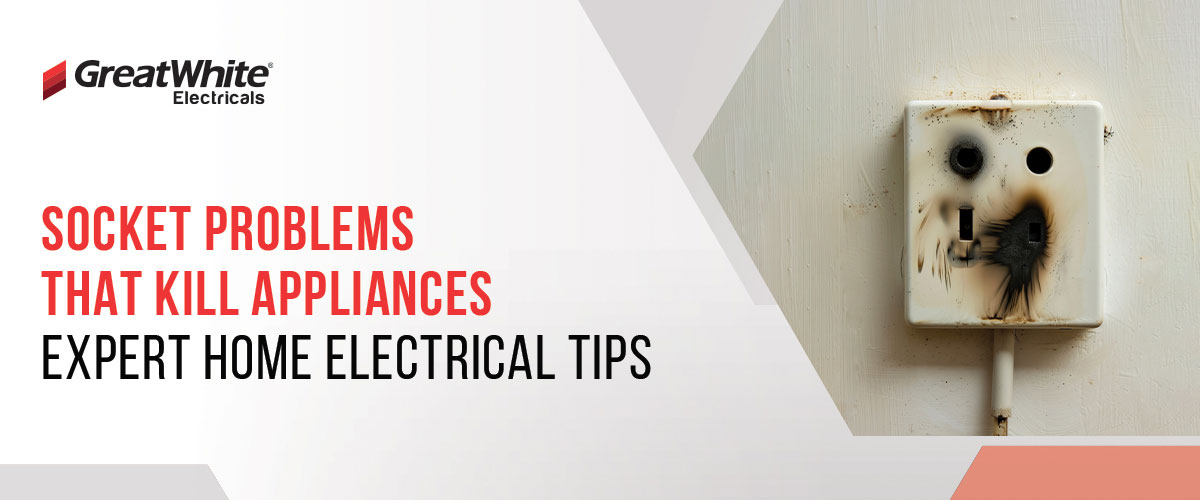
How Poor Socket Quality Destroys High‑End Appliances — Prevention & Fixes
Poor socket quality is a hidden threat to high‑end appliances, quietly shortening lifespans of electric products and triggering costly failures. Loose contacts, worn insulation and undersized or outdated sockets create resistance that leads to voltage drop, arcing, overheating and intermittent power. These stresses damage motors, control boards and sensitive electronics in refrigerators, air conditioners, inverters and other premium devices. In Mumbai’s old apartment houses, these risks are amplified by heavy loads and fluctuating supply, making socket health a critical part of appliance protection.
This guide explains why socket quality matters, how faulty outlets harm appliances and practical steps homeowners can take, from routine inspections and three‑pin earthed sockets to surge protection and consulting a professional electrician in Mumbai, to safeguard expensive gear and avoid preventable repairs.
Why Socket Quality Matters
A socket is the first point of contact between the main power and your electronic appliances. Loose contacts, degraded insulation or undersized sockets create resistance that produces heat, sparks (arcing) and voltage instability; all of which stress electronic components and motors.How Poor Sockets Damage Appliances
- Overheating and melting: Heat from a poor electronic connection can deform plugs and sockets and damage appliance wiring and PCBs.
- Voltage drop and poor performance: Appliances may run inefficiently, trip protection circuits or fail to start when voltage falls below design thresholds.
- Arcing and component failure: Intermittent contact causes arcing that produces electrical noise and transient spikes, degrading sensitive electronics (inverters, SMPS, control boards).
- Fire risk and catastrophic loss: Persistent overheating or sparks can ignite insulation or nearby materials, risking appliance loss and home fire.
Quick Checklist For Homeowners
- Inspect sockets every 6–12 months for discoloration, looseness or burning smell.
- Replace old two‑pin sockets with properly rated three‑pin earthed sockets for high‑power appliances.
- Use surge protectors or dedicated MCB/RCCB circuits for refrigerators, air conditioners and inverter/UPS systems.
- Always keep a professional electrician on speed dial (look for local licensed electricians) to test socket continuity and earthing.
Cost vs. Risk (Decision Guide)
- Low cost: Replace worn sockets and plugs — high ROI; prevents appliance repair bills.
- Medium cost: Install surge protection and dedicated circuits — recommended for high‑end appliances.
- High cost: Full rewiring or panel upgrades — necessary if multiple sockets show faults or if home wiring is old.
RRisks, Trade-Offs And What To Ask Your Electrician
- Risk: DIY socket replacement can worsen loose connections if not tightened to spec. Always call a professional electrician.
- Trade‑off: Surge protectors add cost but protect expensive electronics and are cheaper than repeated repairs.
- Questions to ask: “Can you test socket continuity and earth resistance?”; “Will you fit a dedicated circuit for my fridge/inverter?”
Final Recommendations
- Act now if you notice flicker, heat, burning smell or loose plugs. Replace suspect sockets, fit surge protection and schedule a professional inspection. Small preventive fixes can save thousands on high‑end appliance repairs.