
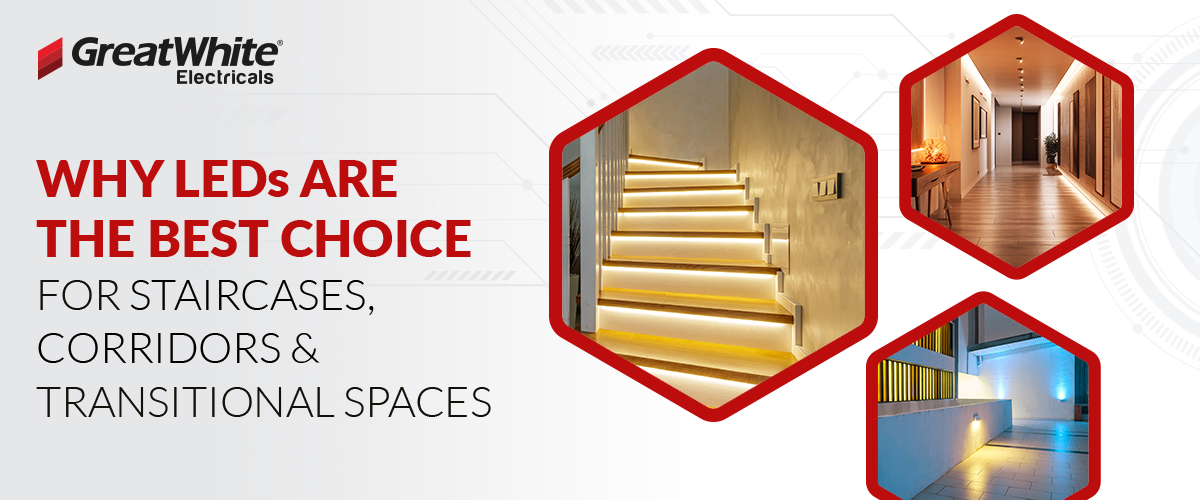
LED Lighting for Staircases, Corridors and Transitional Spaces
LED lighting uses tiny electronic components called light‑emitting diodes to make light. Compared with older bulbs, LEDs use far less electricity, last much longer, run cooler and can be made in many shapes and sizes. That makes them ideal for places where light needs to be reliable, low‑maintenance and easy to control.Why Transitional Spaces Need Good Lighting Transitional spaces are areas people move through such as staircases, corridors, landings and door thresholds. These are not places where people stop and look; they are places where visibility matters most. Good lighting in these zones helps people see steps, read signs and move safely from one area to another. LEDs are especially useful here because they give steady, even light and can be placed exactly where you need it.
Key Benefits
- Safety — LEDs reduce shadows and clearly show step edges, lowering the risk of trips and falls.
- Energy savings — LEDs use much less power than incandescent or halogen bulbs, so they cut electricity bills.
- Low maintenance — longer life means fewer bulb changes in hard‑to‑reach stairwells and corridors.
- Design flexibility — strips, recessed lights and small spotlights let you highlight steps, walls or signs without glare.
- Smart control — LEDs work well with motion sensors and dimmers so lights are on only when needed.
Examples of LEDs in transitional spaces
- Staircase lights indoor: Thin LED strips under each stair lip or small recessed lights on the riser make each step visible without bright overhead glare.
- Corridor lighting: Long, slim LED fixtures along the ceiling or wall washers that gently light the wall to guide people down the hall.
- Outdoor Lighting: Weatherproof LED step lights and path lights keep the route safe when you move from inside to outside.
Practical Solutions and Where to Use Them
For Indoor Stairs
- Under‑handrail LED strips give a soft, continuous glow along the handrail.
- Riser or tread lights (small recessed LEDs) mark each step edge.
- Warm color temperatures (2700–3000K) feel cozy at home; neutral whites (3500–4000K) work well in offices.
Controls That Make a Big Difference
- Match outdoor lighting levels with indoor LEDs at doorways so your eyes don’t have to adjust suddenly.
- Use IP‑rated (weatherproof) LED step lights and path lights for safety and durability.
Controls That Make a Big Difference
- Motion sensors turn lights on only when someone is present.
- Dimmers let you lower brightness at night while keeping enough light for safety.
- Timers and schedules can reduce energy use in rarely used corridors.
- Smart systems let building managers monitor and adjust lighting remotely.
Easy Installation Tips for Best Results
- Aim for even light across steps and landings; avoid bright spots next to dark areas.
- Hide the light source where possible (recessed fittings or diffused strips) to prevent glare.
- Pick the right color: warmer tones for homes, neutral for workspaces.
- Test thresholds: check how indoor and outdoor lights look together at night.
LED lighting is a practical, energy‑smart choice for staircases, corridors and transitional spaces. It improves safety, lowers running costs and gives designers flexible tools to create comfortable, attractive routes. Whether you need staircase lights indoor, consistent outdoor lighting at thresholds or even simple corridor upgrades, LEDs make these spaces safer and more pleasant to use.